
Thommen Medical introduced the clinically validated INICELL® surface in 2012 – a patented surface conditioning concept that redefined the standard for osseointegration.
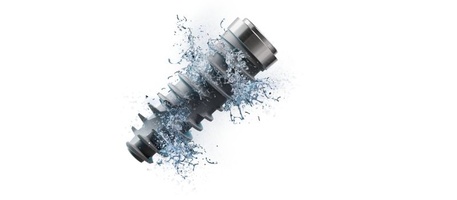
The conditioned surface harnesses hydroxide ions (OH– ions) to create a superhydrophilic environment, supporting protein adsorption and early blood clot formation in vitro – critical prerequisites for successful osseointegration.1-3
Long-term clinical studies demonstrate strong clinical performance and very high success rates of up to 100% with the INICELL® surface.4-9
Significantly higher success rates have also been reported compared with both a conditioned competitor surface and the unconditioned Thommen Medical surface.6-7
This well-established surface chemistry forms the foundation of sOHo Technology® plus.
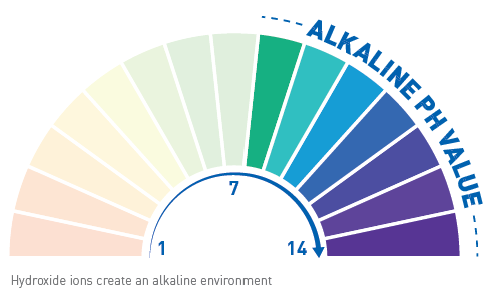

The antimicrobial properties of hydroxide ions are well documented.10-11 Hydroxide ions generate an alkaline environment that damages microbial cell membranes and DNA.10-11
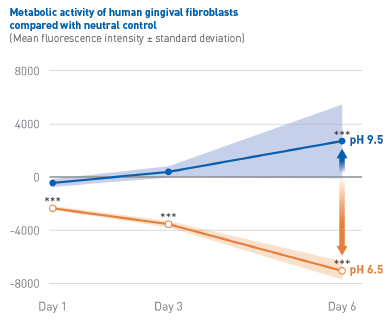
Beyond their antimicrobial effects, hydroxide ions also exhibit regenerative properties, including enhanced metabolic activity as well as increased proliferation, differentiation, and migration in vitro across multiple cell types.11,12-15
In contrast, acidic conditions have been shown to reduce cell growth.15 Wound closure may likewise be impaired over time in an acidic environment.13
Polyhexanide (polyaminopropyl biguanide, PHMB) is a well-established antiseptic widely used in orthopedics and traumatology, wound care, and ophthalmology.16-20 It provides broad-spectrum antimicrobial activity against bacteria, fungi, and certain viruses.17,21-22
Polyhexanide is characterized by high cell tolerability due to its selective interaction with negatively charged microbial membranes.17 This interaction also contributes to sustained antimicrobial activity over time, while no clinically relevant resistance development has been reported to date.17,23
At low concentrations in vitro, polyhexanide has additionally been observed to support tissue regeneration.17,24
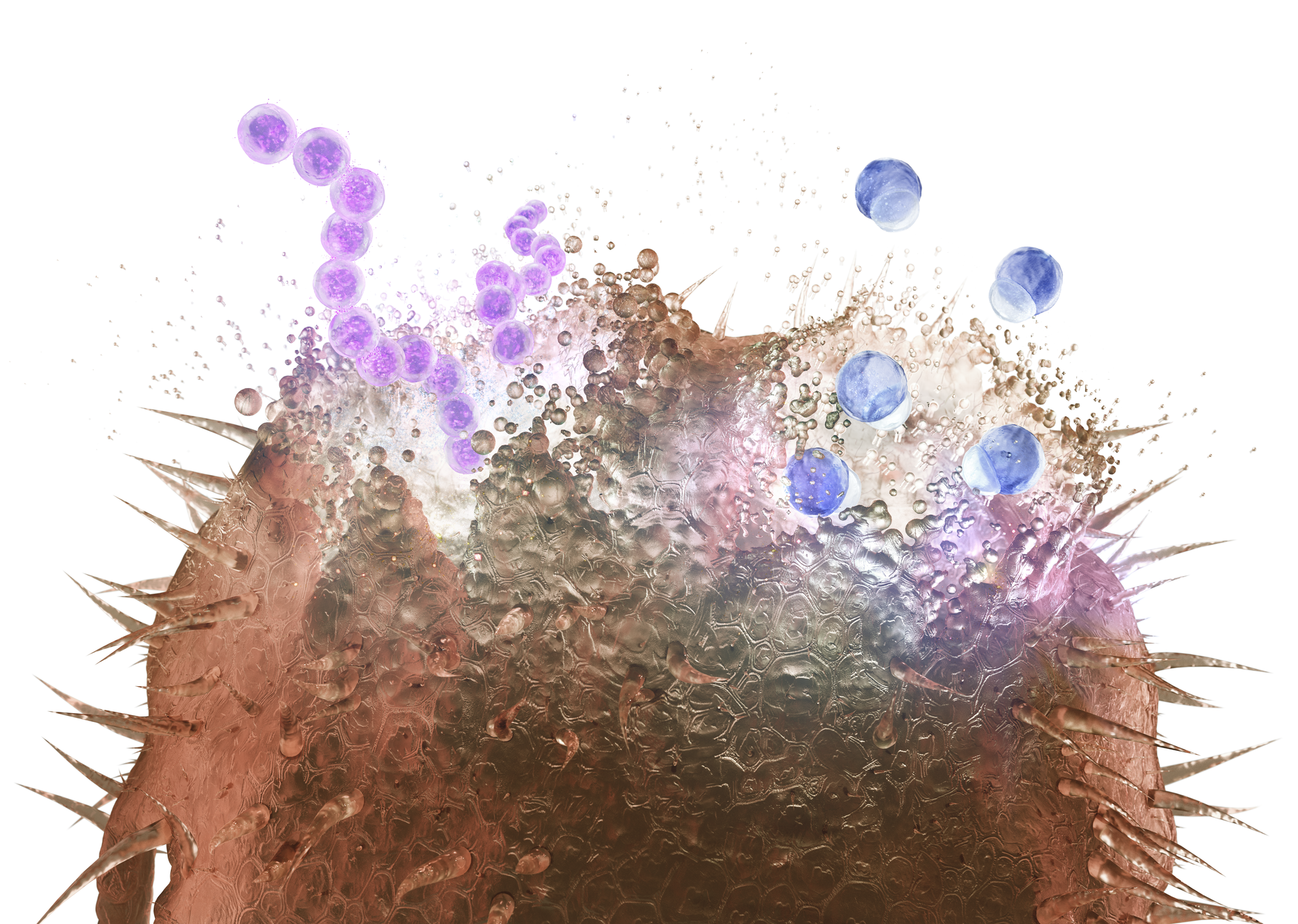
sOHo Technology® plus: Antiseptic and Regenerative Properties Combined
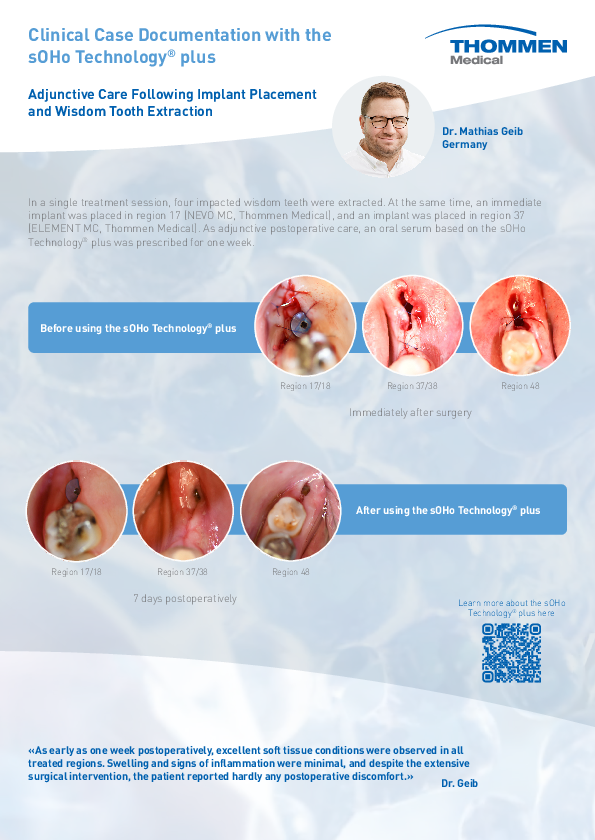
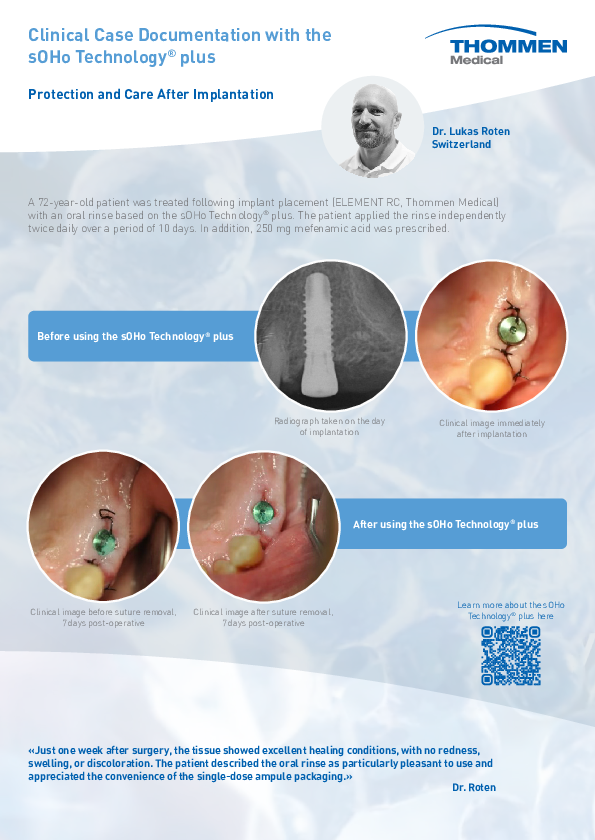
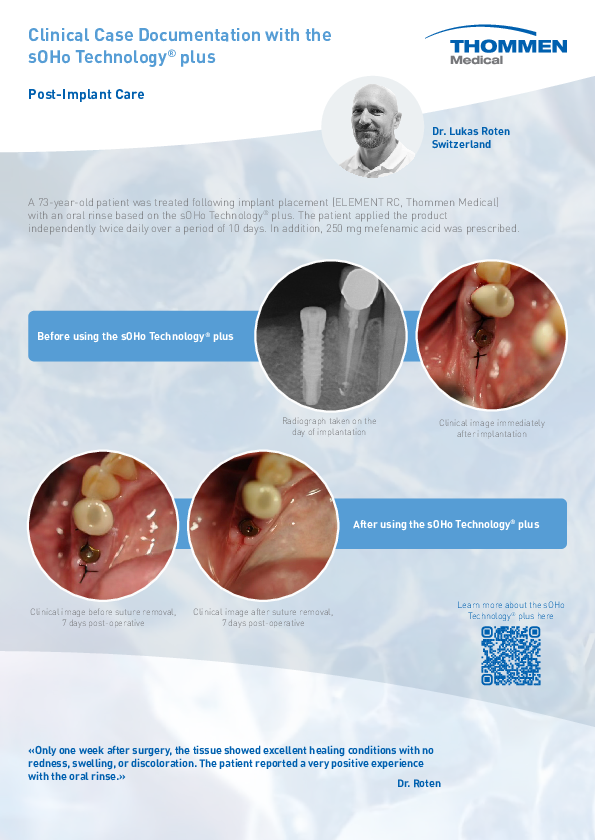
While conventional antiseptics often present a trade-off between antimicrobial efficacy and cell compatibility,25-27 sOHo Technology® plus overcomes this limitation through a patented combination of antiseptic and regenerative properties.15
Pronounced antimicrobial properties
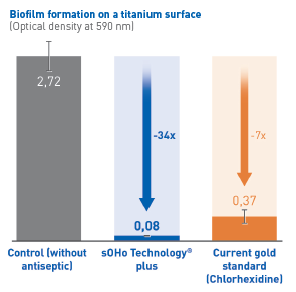
Hydroxide ions and polyhexanide both possess well-documented antimicrobial properties.10-11,17,21-22 In combination, they demonstrate pronounced antimicrobial activity even at low polyhexanide concentrations.15
This is reflected in a significant reduction in biofilm formation and bacterial load ompared with conventional antiseptics or polyhexanide alone.15
As a result, low concentrations of polyhexanide are sufficient, promoting acell-compatible environment and conditions favorable for tissue regeneration.15
Support of cellular regeneration
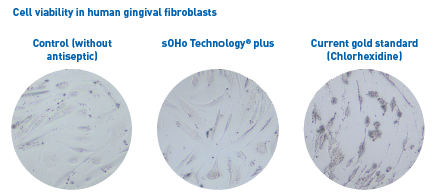
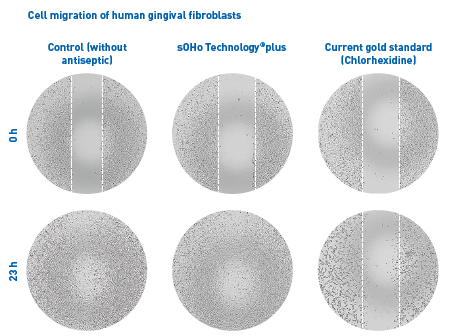
By combining cell-compatible polyhexanide17 with the regenerative effects of hydroxide ions,11-15 the sOHo Technology® plus preserves cell viability and supports conditions favorable for cellular regeneration.15
While chlorhexidine has been shown to inhibit cell growth and induce cell death across various cell types,25-27 studies with polyhexanide17,21 and the sOHo Technology® plus15 demonstrate high cell viability and low cytotoxicity.
 Download
References
1. Tugulu S et al. J Mater Sci Mater Med. 2010;21:2751–63; 2. Burkhardt MA et al. Sci Rep. 2016;6:21071; 3. Burkhardt MA et al. Biomater Sci. 2017;5:2009–23; 4. Hicklin SP et al. Int J Oral Maxillofac Implants. 2020;35:1013–20; 5. Molinero-Mourelle P et al. Clin Implant Dent Relat Res. 2024;26:704–13; 6. Makowiecki A et al. BMC Oral Health. 2019;19:79; 7. Le Gac O et al. Dent J (Basel). 2015;3:15–23; 8.Trombelli L et al. Clin Oral Implants Res. 2024;35:1406–17; 9. Held U et al. Head Face Med. 2013;9:37; 10. Mohammadi Z et al. Int Endod J. 2011;44:697–730; 11. Tan J et al. ACS Appl Mater Interfaces. 2018;10:42018–29; 12. Galow AM et al. Biochem Biophys Rep. 2017;10:17–25; 13. Kruse CR et al. Wound Repair Regen. 2017;25:260–9; 14. Wang S et al. Bioact Mater. 2022;15:316–29; 15. Data on file; 16. Rippon MG et al. J Wound Care. 2023;32:5–20; 17. Hübner NO et al. Skin Pharmacol Physiol. 2010;23 Suppl:17–27; 18. Rosin M et al. J Clin Periodontol. 2001;28:1121–6; 19. Rohner E et al. Orthopedics. 2011;34:e664–8; 20. Grzybowski A et al. Ophtalmol Ther. 2025;14:2735-52; 21. Koburger T et al, J Antimicrob Chemother 2010;65:1712-9; 22. Müller G, Kramer A, Journal of Antimicrobial Chemotherapy 2008;61:1281-7; 23. Fjeld H, Lingaas E. Tidsskr Nor Laegeforen. 2016; 136:707-11; 24. Roth C et al. Skin Pharmacol Physiol. 2010; 23:35–40; 25. Wyganowska-Swiatkowska M et al. Int Journ Mol Med. 2016;37:1594; 26. Liu J et al. J Bone Jt Infect. 2018; 3:165-172; 27. Pilloni A et al. Antibiotics (Basel) 2021;10:1192.